
Energetics of Longevity Core
Metabolism & Biochemistry
The Energetics of Longevity Core provides infrastructure and support for comprehensive longitudinal assessment of metabolism and biochemical pathways implicated in age-related diseases and conditions. Features include the Metabolic Tracer and the Genetic Toolkit Platforms, Mouse Phenotyping and Surgery, Genome Editing and Animal Models, Small Animal Imaging Services, and access to the Flow Cytometry, Translational Research Initiatives in Pathology (TRIP), and Comparative Pathology Laboratories.
EOL Core Directors
Leader
Dudley Lamming, PhD
dlamming@medicine.wisc.edu

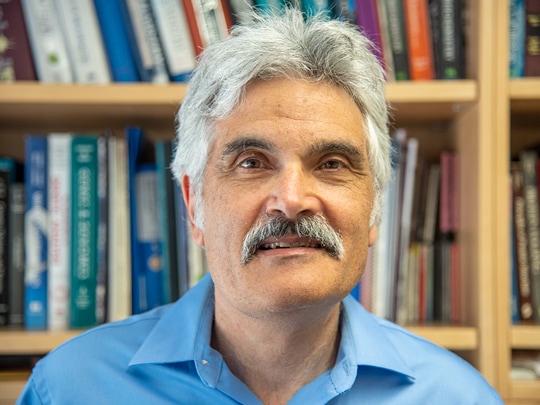
Co-Leader
Alan Attie, PhD
adattie@wisc.edu
Co-Leader
Jing Fan, PhD
jfan4@wisc.edu

Features of the EOL Core
Leader: Alan Attie, PhD – adattie@wisc.edu
Genetic analysis of age and metabolism traits
This platform leverages rich datasets derived from diversity cross mouse models, providing the means to explore novel targets in metabolism regulation, aging, and longevity. WiNSC members and affiliates can receive training and guidance, allowing for a genetic component to be included in their aging research programs. Insights that can be interrogated and validated via human GWAS and mechanistically explored through use of services affiliated with this Core. The Attie laboratory at UW–Madison has been a leader in regional and national collaborations to use genetically heterogeneous Diversity Outbred mice as well as other populations to probe the genetic control of metabolism and to gain molecular insight into molecular insight into metabolic processes. Recent studies have identified genetic drivers of plasma lipoproteins, novel metabolic functions for enzymes, insight into obesity induced diabetic nephropathy, and genetic determinants of pancreatic function and insulin secretion.
The Genetic Toolkit platform provides expertise to assist other laboratories in designing new genetics experiments and in mining a vast amount of existing data from mouse genetic studies conducted not only a UW–Madison, but world-wide. The efforts of this core will be supported by Dr. Mark Keller, a Distinguished Scientist in the Attie Laboratory who has led the genetics projects in the Attie laboratory for over a decade, and Dr. Karl Broman, a Professor of Biostatistics and Medical Informatics who developed the QTL mapping software used worldwide by researchers. In addition to helping to plan and analyze QTL mapping project, biology laboratories commonly generate high-volume data including RNA profiling, metabolomics, lipidomics, analysis of the microbiome, and epigenetic screens. The Genetic Toolkit team can work with you to integrate these data and to generate graphical output. Additional exploratory work can be undertaken with the Integrative Data Science Partnership within the Discovery and Integration Core including large scale data integration and computational modeling.
For all inquiries, contact Grace Zhu – jgzhu@wisc.edu
Leader: Jing Fan, PhD – jfan4@wisc.edu
Dynamics of metabolism
The Metabolite Tracer Platform provides the means to investigate metabolic dynamics. Metabolic diseases are often the result of abnormal rates of production or turnover of metabolites. The most common measurements of metabolites represent a snapshot of a dynamic process but do not distinguish between changes in production and changes in turnover. Metabolic flux can be profiled by applying nutrients that are labeled with stable isotopes at specific positions, i.e. “isotopic tracers”, and following the conversion of the tracer into downstream metabolites. Isotopic tracing studies can provide valuable information on the distribution of the nutrients of interest across tissues, the contribution of different metabolic sources to a particular pathway, the rate of metabolite turnover, or channeling of metabolic intermediates through various pathways.
Isotopic tracing in vivo is a cutting-edge approach that has generated many important discoveries in the field of metabolism in the last decade. But specialized skills are required. First, these types of projects require animal surgery expertise to enable the appropriate delivery of isotopic tracers. For instance, implanting catheters into an animal can be used for infusing isotopic tracers and blood collection for several days without causing stress to the animal. Secondly, skilled personnel are required to analyze the tracer data. Interpreting stable isotope data in particular requires a sophisticated understanding of kinetics and of the partitioning of carbon, nitrogen, or deuterium atoms through metabolic pathways. Molecular profiling by mass spectrometry will be conducted by the Molecular Profiling Hub in the Discovery and Integration Core.
For all inquiries, contact Grace Zhu – jgzhu@wisc.edu
Leader: Dudley Lamming, PhD – dlamming@medicine.wisc.edu
Metabolism of Aging in vivo
The goal of the Mouse Phenotyping and Surgery Service (MPSS) is to provide WiNSC members with access to skilled personnel and equipment for the phenotyping of mouse metabolism, and access to skilled surgical staff. The Mouse Phenotyping and Surgery Core will provide critical resources and expertise to researchers investigating the biology of diabetes and other metabolic disorders. This core will be on the forefront of development and the testing of new ways to prevent and treat metabolic disease.
The MPSS that will provide quantitative assessments of whole-body metabolism, fitness, and physical function. The MPSS has all of the necessary equipment, including EchoMRI body composition analyzers and metabolic chambers for the comprehensive assessment of energy balance via indirect calorimetry, activity tracking and food intake tracking in temperature-controlled chambers. Aging energetics and physical function can be assessed (treadmill, rotorod, grip strength) including the impact of endurance and/or resistance exercise (load bearing, powerwheel) on physical function and ex vivo oxidative capacity (Oroboros O2K respirometry). Longitudinal frailty assessment, including the tracking of robustness as animals age and the quantitative determination of how interventions impact healthspan, is also offered. In vivo metabolite tracing will be available through this services in conjunction with the Metabolite Tracer Platform with surgical aspects covered within MPSS.
For all inquiries, contact Grace Zhu – jgzhu@wisc.edu
EOL Core Links
More resources are available to WiNSC Researchers.
Advanced Genome Editing Lab
This core provides cutting-edge genome editing technologies and expertise for creating precise genetic modifications in animal models. Services include CRISPR/Cas9-based editing, knock-in and knock-out strategies, and consultation on experimental design.
Animal Models Core
The Animal Models Core offers comprehensive services for generating and characterizing genetically engineered mouse models to support aging research. Services include custom model design, embryo manipulation, genotyping, and colony management.
Small Animal Imaging and Radiotherapy Facility (SAIRF)
This service provides innovative state-of-the-art, affordable, noninvasive, high-resolution in vivo and ex vivo imaging.
Behavior Testing Service (BTS)
The BTS provides facilities and equipment for rodent behavioral testing.
Flow Cytometry Laboratory
Flow Cytometry Laboratory offers training and access to standard flow cytometers, cell sorting, and a spectral cytometer.
Translational Research Initiatives in Pathology Laboratory (TRIP)
The Translational Research Initiatives in Pathology (TRIP) Laboratory provides specialized spatial, histological, histochemical, molecular and imaging analyses.
Optical Imaging Core
The Optical Imaging Core offers investigators and biotech partners training and accessibility to advanced imaging technology.
Biomedical Research Model Services (BRMS)
The Biomedical Research Model Services (BRMS) provides expertise and resources for creating and maintaining animal models that support aging research. Services include consultation on model selection, development of specialized models, and guidance on best practices for experimental design and animal care.

Wisconsin Nathan Shock Center
1685 Highland Avenue
Madison, WI 53705
Contact Us:
winsc@medicine.wisc.edu